
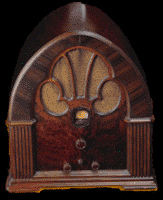
 I hear this question quite a bit. "What's the point of ham radio?" usually tied in with "You know you can just pick up a phone and call someone right?" or "The internet lets you chat across the globe too, you know?"
Yes, I know it's possible to accomplish a task in a seemingly more efficient way, but that's not what makes ham radio interesting. What's the point of sailing, fishing, rock climbing, hiking, gaming, hunting, knitting, auto racing...? There are more efficient methods of travel, attaining food, clothing, etc. So what's the point of any hobby, really? Those who enjoy the hobby will say "it's fun", but that's not a very clear answer because what is fun to one person is boring to another.
With ham radio, like any other hobby, it's a pastime - one that happens to have a lot of electronic underpinnings.
In fact, I liken it to catch-and-release fishing more than chatting or phone calls. Yes, you talk to people, but the majority of hams don’t care about the content of the conversation as much as where the other party is.
In my fishing analogy, I say casting out your lure is like calling out on the radio. "Will I get a bite?" = "Will someone hear me?"
Someone probably will hear you and answer your call. So you respond and find out how well they're able to hear you, where they're from, and perhaps some other information about them. That's like reeling in a fish to measure and weigh them. "Wow! This guy's in the mountains of Nepal!"/"Wow, what a big fish!"
Sometimes the "fish" isn’t very big, the radio contact may be relatively close distance to you, so you say so-long and "cast" again - hoping for bigger fish.
Or maybe a rare fish...
Or a hard-to-catch fish...
Or a relatively famous fish...
Or maybe you want to try fishing with different equipment (bigger, smaller, new technology, relay through a satellite, etc) and see if that helps or hurts what you "reel in". That experimentation is what interests me personally. I'm into making radio contacts with a relatively minimalist (low power) setup from someplace other than home.
It’s a pastime full of opportunities to experiment with radio equipment to see what you can reel in.
Taking things a step further, one of the reasons ham radio creeps into the news cycle from time to time is thanks to ham radio's unique ability to communicate over long distances using no infrastructure at all. There's no infrastructure to be damaged in a natural disaster that would disrupt communications, there's no infrastructure vulnerable to a cyberattack that would knock out the ability to send and receive information - no, amateur radio is a do-it-yourself means of communicating over distances without relying on others to provide all the "in between" links.
So, yes, you can pick up a phone and call someone on the other side of the country (assuming you know their phone number), but that requires you to a) pay for such a service and b) be reliant upon service providers to ensure that link stays available when you need it. Ham radio has no such reliance on others. This is why you see ham radio - old as it may seem - always coming in to fill in the gaps where more modern and sophisticated systems fail.
 I recently came across a schematic that showed how to build an oscillator using the NAND gates inside a 7400 chip. After poking around online, looking for the 7400 (and not some variant) I learned the LeTourneau University College of Engineering has a parts supply closet with a whole stash of them for 5¢ each. (I've known about the parts closet for quite a number of years, but only recently discovered a tall filing cabinet full of most commonly used ICs. (No NE602 or 612s, I'm afraid, but that's another post for another time.)